Showing posts with label CI sound quality. Show all posts

Sunday, 28 November 2010

Another checkup whooooshed by

Last Tuesday we went to Oslo. On the following day, Wednesday, we had another checkup at the Oslo Medical Centre.. (Refusing to call it a hospital.. that's another wing of the building..)

Plane and Tram to the hotel for a good night rest.


The hotel is next to the hospital, so that's very convenient.

Her teacher was with us. Lotte got 3 new teachers this year, and we found that it's good for them to see the process at least 1 time. It's one way to talk about deafness, about CI, about how much Lotte hears.. it's another thing to be there and see it..
The hospital is huge... and very modern...
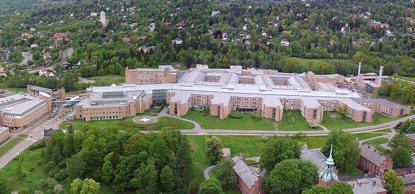

The day starts with the technical stuff. The CI processor was checked and adjusted.
Here, program 3 and 4 were removed. That means that when going through the programs, we now go 1-2-1-2-1-2 instead of 1-2-3-4-1-2-3-4... In itself a minor thing, since we only use P1 for Lotte. BUT with the "teleslynge" (Hearing Loop) in the classroom and school, we have programmed P2 to be weaker and have the "teleslynge only" on there. P1 will have the "teleslynge" with the microphone activated.
So... to summerise:
P1 = Normal program and Teleslynge with microphone activated (MT).
P2 = Reduced (for loud environments) and Teleslynge without microphone (T).
This was perfectly demonstrated when we tried P2 and the "T"... Lotte didn't hear anything any more.. since there was no teleslynge in that area.. and the microphone was "off".... LOL.. It works..

While all the technical programming was done the audiologist was talking to Lotte about how she was hearing. If everything was OK etc.
It was the first time she was interviewed in this way.. after all.. she's older now.
Still, a lot of questions were difficult for her to answer, and Lotte replied many times "affirmative" to questions she didn't understand... Experienced as she is, the audiologist understands that and will refrase the question, or repeat it...
Still a good conversation...

After that over to the echo-free (anechoic) room.
It's amazing how that room works on a person. The only thing absent in that room is... echo's.. Amazingly.. just walking in that room makes (for me) the hair rise on my skin and gives pressure on my head... All that .. just due to the absence of sound...
Lotte needed to repeat words. First single words which went without problems.
She did 100% until she couldn't understand the word "cat". Tried again... but without luck... Very strange, since there were words that are closer to other words that she understood / repeated without problems. Also .. after the "cat" it was 100% again.... Perhaps she's allergic..

Then, sentences in noise. Previously, it would be words or short sentences, but this time Lotte got "grown-up" sentences at grown-up speed. This because.. well... that's how it is in the real world...
After a slow start she did pretty OK...
One sequence was done with the CI on the shoulders. The following sequence was done with CI on the ears. She did a little better on the last one, indicating that some information might be lost with the CI on the shoulder. Next year, we'll start on the ears, then on the shoulders... if it's still an issue.
All this testing was very good info for Lotte's teacher. Seeing how Lotte struggles with some of the tests gives excellent information to her.

A language comprehension test was done after this. Prepositions etc. Lotte has problems with this.
Information with "not" in there for example. The information in the word "not" is just ignored... resulting in wrong answers.
Also she has problems with distinguishing "on top of" and below... She was very consequent in doing that wrong. Anyway.. lot's of work to to in that area.
Again, for Lotte's teacher, it was very valuable information. Seeing where the problems are will be very beneficial for her when she's teaching Lotte.

This test continued after a lunch break. In the end, Lotte got tired and her answers reflected that. (especially in combination with more difficult questions).

After interpreting the tests we talked about the results.
Lotte is doing very well, and basically the tests show where the attention should be regarding Lotte's development.
Basically... hearing is not a problem. Sure, in noisy environment her ability to hear is reduced.
But, it is much more about catching up the "understanding"-gap left by 2-3 years of deafness... Training the cognitive part of the brain...
Plenty of work to do. For Lotte, for us, the teachers and the rest of the support-group around Lotte..

Monday, 15 February 2010

Yes... I can hear that. :-)

Saterday morning... I walk down the stairs into the living room... The girls, Lotte and Sanne are watching TV, around the corner.. they can't see me coming down..

Then, a little voice say's... "Good morning daddy.. :-) "
Lotte gives me a big smile when I turn the corner...
"I could hear it was you.. :-)  "

How's that for CI technology... Hearing someone coming down the stairs, and even hearing who it is..

So, next time you hear a simulation of "how a CI sounds".... don't believe it..
Because - there's one thing those programs can't simulate...
The brain...

Monday, 4 January 2010

Hearing and speaking....

Wonderful "happening" this morning..
Woke up late, and were listening to Lotte playing with Lego outside our bedroom. Lotte would have been up since 7:30, and she comes to us to have the batteries (rechargeable) put in her processors and have the pouches pinned on her clothes.
So... listening we were wondering if she had a friend with her, since she was engaged in role-play. There was definitely an alternate voice, and it sounded like one of her friends from down the road was with her.. So, Lotte's mum got up, dressed and had a look, only to find Lotte engaged in a wonderful play.. just by herself.

Many times, people will talk about how CI would sound completely different compared to normal hearing... and fine, who can argue with that, except that here's a girl that is doing two different characters, in two different voices, communicating in a make-believe conversation...
Pretty amazing, and far, far away from the simulations you can find on the net.
The mind is an amazing tool, and apparently is able to discriminate sounds very well... even with "only" 22 or 24 electrodes..

Sunday, 29 June 2008

Bi-lateral CI versus 1 CI - another "YES !"

More and more research is done with regard to bi-lateral CI.... and they are confirming what we already suspected.. it does make a significant difference.
Like I said before... the only experience we have had with Unilateral CI is when one of the processors failed.... well, the display wasn't readable.... and we had to send it in.... Send 1 in, so Lotte was still able to hear. That's when we experienced the difference....

So, we cannot compare - really, but we do see how well she hears in noisy environment (and with 3 children in the house... it's noisy at times) how her speech develops etc.....
We felt that bi-lateral CI had a lot to do with it....
..... guess it has.

Description of the article is below..... just to make sure a link suddenly turns up "empty...."
.... enjoy!

2 Bilateral Cochlear Implants Are Definitely Superior To 1

Main Category: Hearing / Deafness
Also Included In: Ear, Nose and Throat; Medical Devices
Article Date: 30 May 2008 - 5:00 PDT

A study of cochlear implant patients seen by Indiana University School of Medicine physicians is the first research to show evidence that cochlear implants in both ears significantly improves quality of life in patients with profound hearing loss and that the cost of the second implant is offset by its benefits.

The study, which appears in the May issue of the journal Otolaryngology-Head and Neck Surgery, found that improvements in factors that contribute to quality of life including such critical abilities as hearing in noisy environments, focusing on conversations, and speaking at an appropriate volume resulted when cochlear devices were implanted in both ears.

This study may have a significant impact for profoundly deaf individuals who hope to have their health insurance providers pay for bilateral rather than the standard single cochlear implant. The study authors found the benefits of the second implant outweighed the added cost of the second device.

"We didn't know that cognitive skills and emotional issues would so significantly improve with the implantation of a second cochlear device. In addition to the physiological improvements we saw in patients who had bilateral implants, we found that patients were able to function better in noisy environments and definitely felt better about themselves," said senior study author Richard Miyamoto, M.D., Arilla Spence DeVault Professor and chairman of the Department of Otolaryngology-Head and Neck Surgery.

Dr. Miyamoto is the immediate past president of the American Academy of Otolaryngology-Head and Neck Surgery. First author of the study is Bradford G. Bichey, M.D., MPH, a former research fellow and resident at the IU School of Medicine and currently an otolaryngologist in Marion, Ind.

"Profoundly deaf individuals who were born with hearing, their families, physicians, and health insurance providers now have the data they need," said Dr. Miyamoto. "There is definite improvement after one implant and there is a significant added bump in sound and speech perception after the second implant. Emotional well being improves. And we found a favorable cost utility analysis. Our hope is that with these findings more health insurance companies will cover the cost of bilateral implants and bring a superior quality of life to a large number of individuals."

Approximately 1.4 million American are deaf in both ears and experience significant impairment in communication with the hearing world according to the study authors. The IU School of Medicine cochlear program is one of the largest in the country. IU physicians have implanted more than 1,500 cochlear devices over the past quarter century at Indiana University Hospital and Riley Hospital for Children.

----------------------------
Article adapted by Medical News Today from original press release.
----------------------------

This study was funded by the IU School of Medicine's Department of Otolaryngology-Head and Neck Surgery.

Source: Cindy Fox Aisen
Indiana University

Wednesday, 25 June 2008

Another milestone..

So many milestones that will be reached when raising a child. And, even though we know they should appear, we never know when they come... and then, suddenly, after a long straight stretch of road they appear around the next corner... Suddenly, unexpected... but clearly visible...


With a child born deaf there are also milestones, some the same, some different. And with Lotte, born deaf, and implanted with bi-lateral CI in november 2004, the milestones might be the same as for a hearing child... they just are a bit further up the road... or did we just get on the road a bit later?

Anyway.... today we turned one of those corners...

Lotte was sitting at the table, waiting for dinner.. Suddenly, she said.... "Mammaaaa.... " (standard start of an important message :-) ... and continued "kniv - mes" (knife), "hus - huis" (house) etc... A switch has closed and she got the idea of two languages... And not only that... Different words is one thing, but she went further and did the same with the names of her siblings... the "Norwegian pronunciation - Dutch pronunciation"..

Something really clicked. And to repeat the slight change in pronunciation of the names of her brother and sister is another amazing feat.

Remember how people sometimes want to know how CI sounds... there are computer-simulations that will reproduce a sentence simulating 4, 8 or 12 "electrodes" and it sounds mechanical, distorted etc... I am always skeptical of these simulations because they ignore a major aspect... the brain.

And this shows it... The simulation of the same name with a different "dialect / language" would very likely produce the same "sound" when run through only 12 electrodes... The differences are small, but Lotte has no problem reproducing them... (Reminds me when she repeated the word "Aubergine" perfectly...)

Anyway... To all those out there that are inpatient... (like we still are), and who look at their children when they play with children their own age and compare them... (like we do), I would just like to say that with CI, we put our children on the same road as the hearing children. They will follow the same road, and they will have the same milestones as the rest... but still, they got on the road a little later... with a different vehicle.

And the milestones... they are not fixed. For every child - deaf or hearing - they are at different places... but they will all meet them.... and they will meet them all.

The difficult part is... being patient..


Friday, 30 May 2008

Bi-lateral CI - off course...

It makes me smile when research shows what people that experience bi-lateral CI them self, or with their child, already know.
Bi-lateral CI makes a huge difference compared to only 1.
I posted the article in here, as I don't know how long these articles remain available..
-----------------------------------------------------------------------------------------------

2 Bilateral Cochlear Implants Are Definitely Superior To 1

A study of cochlear implant patients seen by Indiana University School of Medicine physicians is the first research to show evidence that cochlear implants in both ears significantly improves quality of life in patients with profound hearing loss and that the cost of the second implant is offset by its benefits.

The study, which appears in the May issue of the journal Otolaryngology-Head and Neck Surgery, found that improvements in factors that contribute to quality of life including such critical abilities as hearing in noisy environments, focusing on conversations, and speaking at an appropriate volume resulted when cochlear devices were implanted in both ears.

This study may have a significant impact for profoundly deaf individuals who hope to have their health insurance providers pay for bilateral rather than the standard single cochlear implant. The study authors found the benefits of the second implant outweighed the added cost of the second device.

"We didn't know that cognitive skills and emotional issues would so significantly improve with the implantation of a second cochlear device. In addition to the physiological improvements we saw in patients who had bilateral implants, we found that patients were able to function better in noisy environments and definitely felt better about themselves," said senior study author Richard Miyamoto, M.D., Arilla Spence DeVault Professor and chairman of the Department of Otolaryngology-Head and Neck Surgery.

Dr. Miyamoto is the immediate past president of the American Academy of Otolaryngology-Head and Neck Surgery. First author of the study is Bradford G. Bichey, M.D., MPH, a former research fellow and resident at the IU School of Medicine and currently an otolaryngologist in Marion, Ind.

"Profoundly deaf individuals who were born with hearing, their families, physicians, and health insurance providers now have the data they need," said Dr. Miyamoto. "There is definite improvement after one implant and there is a significant added bump in sound and speech perception after the second implant. Emotional well being improves. And we found a favorable cost utility analysis. Our hope is that with these findings more health insurance companies will cover the cost of bilateral implants and bring a superior quality of life to a large number of individuals."

Approximately 1.4 million American are deaf in both ears and experience significant impairment in communication with the hearing world according to the study authors. The IU School of Medicine cochlear program is one of the largest in the country. IU physicians have implanted more than 1,500 cochlear devices over the past quarter century at Indiana University Hospital and Riley Hospital for Children.

----------------------------
Article adapted by Medical News Today from original press release.
----------------------------

This study was funded by the IU School of Medicine's Department of Otolaryngology-Head and Neck Surgery.

Source: Cindy Fox Aisen
Indiana University
-------------------------------------------------------------------------------------

Thursday, 28 December 2006

Technology... can we really compare HA's and CI's?...

It's easy to compare cochlear implant (CI) with a hearing aid (HA) and frequently this is done in a single breath. However, not by people that have used a HA before, and now use the CI. They explain that CI goes beyond HA. Not just a little, but a lot. For Lotte we have no comparison other than she did not benefit - in our opinion - from HA's.

But there's another part of the equasion that is quickly forgotton. And that is the CI of 10 years ago, compared to now. I quickly compare to our computer now and 10 years ago. We cannot imagine using a 10-year computer with the programs we use nowaday's. It simply will slow down to a complete halt.

This is how I see CI as well. 10 Years ago, software and hardware were far slower and perhaps this brought the CI's closes to the HA in most respects. After all. With the speeds available at that time, all processing power needed to be used for speech. But nowadays, technology has become so much faster, that with the same capacity a wider frequency-range can be used. And is used.

Manufacturers are moving more and more into virtual electrodes and creating software specialised to enjoying music. The new CI-user is no longer satisfied with "just" speech but wants to go beyond that. More environmental sounds and music.

With Lotte we see her speech development which is going well, but more impressive is the level at which she hears. She is able to hear very soft sounds. She's able to whisper, and understand whispering.
But with music she shows little interest. She uses melody but sings in a monotone way..
Is this due to her development or is this due to mapping being focused on speech?

The technician mapping her is very good at his job. He has done it from the first time CI came around, and in a way made it possible for many children and adults to hear.
But this might be the problem. Focus has allways be on speech for him. THIS was the goal and accomplishment. The achievement was to go from deaf to hearing to understanding speech. There was technically never room to go beyond speech, and perhaps this is still the attitude and expectation. Even though technology has moved one, the idea of hearing more than speech is still foreign.

Obviously I'm lacking knowledge in this area. What are the possibilities with Freedom CI. She has the latest equipment both inside and outside, but I have no idea as to what level it is being used.
What I do know is that Lotte is developing well, speech-wise, and that she has never had a bad experience with CI in the way that she does not want to wear it. She hardly pulls it off due to discomfort and is quick to put it on again.
But, there must be more possibilities. Other companies advertise with their progress (e.g. Advance Bionics, MedEl), showing the possibilities, but little is heared when we do our mapping.

Time to investigate!!
--------------------
Cochlear - Smart Sound - Much information in the Global White Papers (Have to log in)
Advanced Bionics - Hi-Res FDA approval - HiResWFidelity120.pdf (Available for adults only) - Bilateral Study Overview
MedEl - FineHearing

Monday, 22 November 2004

Eerste Activation - Dag 1

Vandaag was je vroeg wakker, 06:16 uur. Dan duurt het lang als je moet wachten tot 10:00 uur. Eenmaal in de wachtkamer wilde je niet mee toen ze ons kwamen halen.
Je herkent het ziekenhuis, je bent hier eerder geweest en toen gebeurden er dingen die je niet zo leuk vond.
Op mamma's arm ga je huilend mee naar binnen. Dit verdwijnt echter snel wanneer er fantastisch speelgoed te voorschijn komt.
De electroden worden gecontroleerd en alles werkt goed. Als Ole begint met geluidspulsen ben je absoluut niet onder de indruk. Er heerst wat onenigheid tussen jou en ons over het feit dat je de magneetjes moet laten zittenop je hoofd.
De geluidspulsen zijn heel zwak om je niet te laten schrikken; op deze manier "sluipen" ze je hoofd binnen. Voor ons wat minder spectaculair dan we verwacht hadden, maar het feit dat je het niet oncomfortabel vindt is heel positief , wordt ons verzekerd.
Tussen nu en donderdag wordt het geluid heel langzaam opgevoerd.

Na ruim een uur geef je aan heel moe te worden, dan is het pauze voor de lunch.
NA een uurtje slapen zijn we weer terug bij Ole, en gaat het volume weer omhoog..

NB: je maakt nog veel dezelfde geluiden als voorheen, met dezelfde intensiteit. Dat betekend naar alle waarschijnlijkheid dat je je eigen stem niet hoort.

Audiograaf: Ole
Audiopedagoog: Tove

(Some) Milestones

  • 2013-08: Grade 6
  • 2012-08: Grade 5
  • 2011-08: Grade 4
  • 2011-03: BTE's on the ear
  • 2010-08: Grade 3
  • 2009-08: Grade 2
  • 2008-08: Mainstream School (6y. old)
  • 2006-10: All-hearing Kindergarten (4y. old)
  • 2004-11-22: CI activated (27 m. old)
  • 2004-10-04: Bi-lateral CI (26 m. old)
  • 2003-08: Deaf/HOH/CI Pre-school/"DEAF" Kindergarten (12m. old)
  • 2003-07: HA's fitted (11 m. old)
  • 2003-06: Diagnosed deaf. Start sign-language (10m. old)
  • 2002-11: Suspicion loss of hearing (4 m. old)
  • 2002-08: Born - A fierce LION
--- Google Analytics