Showing posts with label Technology. Show all posts

Thursday, 7 July 2016

Time flies..

..
Suddenly it is year#12 with CI's and as one can see from the frequency of the updates on this blog... it is going good.
So good that there is not much to tell. And then again, that little fact implies that there is so much going on..
Let's see. Finished her first year on the new school.
That meant letting go of the security of the teachers that stood with her for 7 years, and taking her own control, with still help from the new teachers.

That has gone well. The sound system has been transferred from one school to the other so children new to her class needed to get the hang of speaking in a microphone.
She is still reluctant to use the FM equipment.

With the Cochlear equipment she "got" a year ago she has many opportunities but she can't be bothered. Still.. we will start pushing more..
The experts that guide Lotte end her teachers, Cochletten from Oslo, are also pushing for it. They know it will help Lotte a lot. We just need to make sure Lotte will get an "A H" moment and start using it.. One can hope..

That reminds me of an incident where she messaged me at work telling that both CI's didn't work. OK - both, that can't be a electronic problem in the CI. Two at the same time is VERY unlikely.. Batteries...
So I asked.. "Are the batteries charged? Did you try the backup." Answer: "Yes. Same problem."
Hmm.. None of the batteries charged? The charger must be broken.. So I asked "Can you put the FM - Mini-Mic - on. Does it work now..??
Lotte tried... No. Didn't work..
I had no idea. The professionals had no idea. Why would both CI's stop at the same time. I got to know from Lotte's brother and sister that she did hear a bit..
Then, The provider of the CI's and equipment had a great idea.. "When is the last time the filters on the mic's were changed out.."..
Uhhhh. long time ago.. Lotte's mom changed the filters.. and ... BACK IN BUSINESS..
Turned out that she had worn a wig at school. Dust must have clogged the filters up the day before....
NOW, she should have been able with the  mini-mic, but guess what. She hadn't charged them So they didn't work... Had they worked, I would have concluded that it would have been the microphones...
So.. We used Lotte's panic due to the situation to show how important it is to have her equipment ready. Keep them charged, have backups ready or change them out in good time..
"If you don't you might end up not being able to hear...".
(Which did happen later in the month... At the theatre the batteries ran dead.. Tough luck..)

Otherwise we went to the USA in 2015. Visiting NYC and in the process meeting up with some "CI-" friends. Meeting in NY and visiting in their home town.
Great to see Lotte be at ease with those lovely people and their children. Of course a bit hesitant at first, but after a warming up period she had no problem chatting with her new friends in English..
This year Lotte promised she would be our German guide. She learned German at school and can use it this vacation when we go to the castle that stood model for Disney.

More to come...


Sunday, 17 April 2011

How it works....

==================================


==================================


==================================

Tuesday, 21 December 2010

A Parents "Duh"..

We often see this image when there are explanations how the CI works and where the electrodes are located..
But a couple of days ago, I noticed in a magazine ("Din Hørsel" - 08/2010) where the CI is actually located..

To be fair.. I had seen something like it with X-ray pictures of (bilateral-) CI but this  picture (not here on the side... but when you click on it..) made me aware of it..

Think of your face.. and then picture where the snailhouse is located.. and then.. click on the picture in this post..


________________________________________________________
Pictures are from Medisan.. the provider of Lotte's CI

Sunday, 28 November 2010

Another checkup whooooshed by

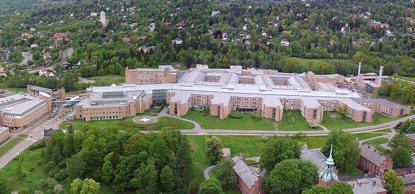
Last Tuesday we went to Oslo. On the following day, Wednesday, we had another checkup at the Oslo Medical Centre.. (Refusing to call it a hospital.. that's another wing of the building..)

Plane and Tram to the hotel for a good night rest.


The hotel is next to the hospital, so that's very convenient.

Her teacher was with us. Lotte got 3 new teachers this year, and we found that it's good for them to see the process at least 1 time. It's one way to talk about deafness, about CI, about how much Lotte hears.. it's another thing to be there and see it..
The hospital is huge... and very modern...


The day starts with the technical stuff. The CI processor was checked and adjusted.
Here, program 3 and 4 were removed. That means that when going through the programs, we now go 1-2-1-2-1-2 instead of 1-2-3-4-1-2-3-4... In itself a minor thing, since we only use P1 for Lotte. BUT with the "teleslynge" (Hearing Loop) in the classroom and school, we have programmed P2 to be weaker and have the "teleslynge only" on there. P1 will have the "teleslynge" with the microphone activated.
So... to summerise:
P1 = Normal program and Teleslynge with microphone activated (MT).
P2 = Reduced (for loud environments) and Teleslynge without microphone (T).
This was perfectly demonstrated when we tried P2 and the "T"... Lotte didn't hear anything any more.. since there was no teleslynge in that area.. and the microphone was "off".... LOL.. It works..

While all the technical programming was done the audiologist was talking to Lotte about how she was hearing. If everything was OK etc.
It was the first time she was interviewed in this way.. after all.. she's older now.
Still, a lot of questions were difficult for her to answer, and Lotte replied many times "affirmative" to questions she didn't understand... Experienced as she is, the audiologist understands that and will refrase the question, or repeat it...
Still a good conversation...

After that over to the echo-free (anechoic) room.
It's amazing how that room works on a person. The only thing absent in that room is... echo's.. Amazingly.. just walking in that room makes (for me) the hair rise on my skin and gives pressure on my head... All that .. just due to the absence of sound...
Lotte needed to repeat words. First single words which went without problems.
She did 100% until she couldn't understand the word "cat". Tried again... but without luck... Very strange, since there were words that are closer to other words that she understood / repeated without problems. Also .. after the "cat" it was 100% again.... Perhaps she's allergic..

Then, sentences in noise. Previously, it would be words or short sentences, but this time Lotte got "grown-up" sentences at grown-up speed. This because.. well... that's how it is in the real world...
After a slow start she did pretty OK...
One sequence was done with the CI on the shoulders. The following sequence was done with CI on the ears. She did a little better on the last one, indicating that some information might be lost with the CI on the shoulder. Next year, we'll start on the ears, then on the shoulders... if it's still an issue.
All this testing was very good info for Lotte's teacher. Seeing how Lotte struggles with some of the tests gives excellent information to her.

A language comprehension test was done after this. Prepositions etc. Lotte has problems with this.
Information with "not" in there for example. The information in the word "not" is just ignored... resulting in wrong answers.
Also she has problems with distinguishing "on top of" and below... She was very consequent in doing that wrong. Anyway.. lot's of work to to in that area.
Again, for Lotte's teacher, it was very valuable information. Seeing where the problems are will be very beneficial for her when she's teaching Lotte.

This test continued after a lunch break. In the end, Lotte got tired and her answers reflected that. (especially in combination with more difficult questions).

After interpreting the tests we talked about the results.
Lotte is doing very well, and basically the tests show where the attention should be regarding Lotte's development.
Basically... hearing is not a problem. Sure, in noisy environment her ability to hear is reduced.
But, it is much more about catching up the "understanding"-gap left by 2-3 years of deafness... Training the cognitive part of the brain...
Plenty of work to do. For Lotte, for us, the teachers and the rest of the support-group around Lotte..

Friday, 8 October 2010

Homework...

Yesterday a great moment..
Lotte needed to finish some homework; writing down 30 (Norwegian) words that they have been using the last 3 weeks. We say them out loud, she needs to listen to them, and then write them down.
Lotte's mother is in Holland, visiting grandma...
Just before we started the homework, I thought to let Lotte talk to her mother via Google-Chat-Video....

This means OK image with bad sound from the Acer mini-laptop. (Aspire-One)
But Lotte seemed to have no problems with understanding the other side, and before we knew it, her mother was saying the words, and Lotte wrote them down on the computer in the chat-line......
This was so wonderful.... Some of the words are pretty close - sound-wise - but Lotte understood them well.. in fact.. she made only one mistake....

Imagine.... our deaf daughter here in Norway, listening to her mother who's in Holland saying the words she needs to write down, and then Lotte listning, then writing them on the computer in Norway... being displayed in Holland.
Who could have thought that 10 years ago....
All this technology helping Lotte to make the best of the possibilities life has to offer....

Wednesday, 2 September 2009

Deaf shame...

Found an interesting post in this blog....
Sure Lotte will experience this as well... not sure to what degree though.... Up to us parents to keep an eye on it.

Yesterday Lotte commented that the children in the first grae (age 6-7) were asking her (Lotte is now in second grade) what "it" is, the BTE's on the shoulders and the coils on her head.
Lotte has no answer for them.....
Lotte explained to us that she did not like being asked all the time. Actually, I have never experienced Lotte explaining her CI to anyone. I think that there is no real explanation to her. It's how it is. I'm sure the questions will come later, but for now, she hears with CI... end of (her) story.

So, we contacted the school, and asked if the teachers in the first grade could do something about it. In itself, this is difficult. Putting focus on it could be a bad thing. In a way, the children just ask what it is. A simple "I need it to hear" would be enough explanation.. We noticed that last year, with Lotte's class-mates. None of them is interested in a 5-minute explanation on CI.... A straightforward explanation is enough to cure the curiosity..

But of course it will be a matter of time before Lotte will start ask questions herself. Will we be ready for it...??? I guess not.... How do you prepare for that... .really..

We notice how she is thriving on sound, but also how there's sometimes a part she's missing. She has her own strategies to cope with it. Guessing answers, ignoring questions, making sure she's the one doing the talking.... Many different strategies....

The best one is of course how she answers a question that ends with ".... , isn't that right?"... Can you guess the answer to that question ....????

==========================
btw.... followup on that site...

Thursday, 20 December 2007

Restoring the senses..

On one of the messageboards a link was given to audiofiles of 6 lectures.
Well worth the downloading and listning to it on your computer or MP3-player

The Boyer Lectures:
Every year the ABC invites a prominent Australian to present their ideas, and the results of his or her work and thinking on major social, scientific or cultural issues in a series of radio talks, which have become known as the Boyer Lectures.

The series was inaugurated in 1959 as The ABC Lectures, but in 1961 the series was renamed, as a memorial to Sir Richard Boyer, former Chairman of the ABC, who had been largely responsible for its introduction.

(From this webside)
This year marks the 48th anniversary of the Boyer Lectures.

Professor Graeme Clark, creator of the bionic ear, is ABC Radio National's Boyer lecturer for 2007. In this series of six lectures ..., Professor Clark draws on decades of experience as a clinician, surgeon and researcher to celebrate our senses. He also tells the compelling story of how the bionic ear was created, and provides an insight into the extraordinary future of bionics.

In the introduction to his first lecture Professor Clark provides his own overview of what he will discuss in this lecture series.

"In Restoring the Senses I want to highlight the importance of our senses, and how they can be restored with bionics. In the course of the first lecture, I hope you will appreciate the amazing way our senses function. Then in the second lecture, discover how we are affected by the loss of any one of these senses, as they are the only way we experience the world around us. In the third lecture I will explain how I set out to restore the sense of hearing. In lecture four we will learn how the bionic ear became a reality for those severely and profoundly deaf people who had hearing before going deaf. In the fifth lecture we will discover that children born deaf can use a bionic ear to develop normal spoken language. Finally, in the sixth lecture we will learn how bionic ear research has created a new field of Medical Bionics, which I hope will eventually lead to a bionic eye for blindness, a bionic spinal cord, and bionic nerve repair to help restore the senses of touch and movement."

2007 Boyer Lectures - Restoring The Senses

Tuesday, 7 August 2007

Light CI

Friday, August 10, 2007


Making Deaf Ears Hear with Light


A laser-based approach could make cochlear implants, which currently use electrical signals, more effective.


By Michael Chorost


About 100,000 profoundly deaf people now hear with cochlear implants, which work by stimulating the auditory nerve with a string of electrodes implanted in the inner ear. While the devices enable many users to converse easily and use telephones, they still fall short of restoring normal hearing. Now scientists at Northwestern University are exploring whether laser-based implants could one day outperform today's electrical version.


The mammalian ear uses neural firing rates as one way of encoding sound. As part of a project funded by the National Institute for Deafness and Other Communication Disorders (NIDCD), Claus-Peter Richter and his colleagues at Northwestern have demonstrated that they can control firing rates in the auditory nerve of animals using infrared laser radiation. They are now trying to establish that it's safe to use for long periods of time and that it can manipulate neural firing rates with enough precision to send useful information to the brain.


With conventional cochlear implants, electrical signals spread in the wet, salty environment of the body, muddying the signal. That makes it difficult to trigger specific populations of nerves inside the cochlea. Further complicating matters, simultaneous pulses in different locations merge with each other, stimulating the cochlea everywhere instead of in the desired locations.


Engineers work around the problem by triggering only one or two of the 16 or 24 electrodes in the inner ear at a time. It's done so rapidly that the user has the illusion that all of the electrodes are firing, but the result is still a relatively crude simulation of normal hearing. To many cochlear implant users, voices sound mechanical and music sounds washed out.


An infrared laser, on the other hand, can be beamed at nerve fibers with pinpoint accuracy. Furthermore, the directional nature of laser light means that optical pulses in different places won't interfere with each other. The increased precision of neural stimulation would make voices and music sound more natural, and users would be able to converse in noisy environments more easily.


While it's not yet clear why infrared radiation can trigger activity in the auditory nerves, Richter hypothesizes that it heats the cells slightly, opening ion channels in the cell walls and sending an electrical signal down the length of the neuron.


A major question is whether it's safe to stimulate nerves in this way for long periods of time. So far, Richter and his colleagues have shown that auditory nerves in anesthetized gerbils can be stimulated with infrared laser radiation for up to six hours without damage. At present it's not feasible to run the tests for longer, but Richter is planning long-term studies in animals with permanently implanted devices.


The researchers are also figuring out how to precisely control neuron activity with lasers. The ear encodes pitch and loudness not just by firing nerves in particular places, but also by modifying the rate at which they fire. So far, Richter has shown that laser radiation can reliably make neurons fire up to 250 times per second, which is comparable to the rate at which early-model conventional cochlear implants drive neurons.


Human trials are years away, but there are several ways in which infrared technology might be used to build a working cochlear implant. One is to use fiber optics instead of electrodes in an array inserted inside the cochlea, somewhat similarly to the way conventional cochlear implants now use electrodes. Early trials of such a system might involve replacing one or two electrodes of a conventional implant with fiber optics to test their effect. Another is to put an optical fiber bundle in front of the cochlea's round window to stimulate auditory neurons without opening the cochlea. (The round window is a thin membrane in the cochlea that absorbs fluid displacement as sound waves travel through it.)


An even more futuristic possibility is to use gene therapy to make auditory neurons responsive to particular wavelengths of light. At MIT, Ed Boyden has been altering nerve cells' genes so that they fire when exposed to one wavelength of light and stop firing when exposed to another. According to Richter, this approach would require less power to activate cells, which might be safer in the long run. Of course, this approach carries all the caveats that typically accompany gene therapy and would require a way to precisely deliver gene therapy to the relevant auditory cells.


"If proven safe and efficacious, optical stimulation could open up ultra-high density stimulation interfaces for the peripheral nervous system," says Boyden. "The process of combining optics and neurons may also pave the way for many future innovations - moving beyond the ubiquitous electrode to new modalities of neural control."

Tuesday, 2 January 2007

Cochlear Implants - A Technical and Personal Account

A very interesting overview of hearing for those who are interested.
Got it on AllDeaf from Boult. Thanks !!


Install the files as instructed and be amazed. It's a big file (50 Mbyte), but worth the waiting...

------------------(Below the original post with links) -----------------------------------------


Cloggy and et al, You may be interested in viewing this PP slides..
It is windows only... Ian Shipsey's Colloquium "Cochlear Implants a Technical and
Personal Account" (he has CI, a Medel Combi as per his page;
Ian Shipsey's Web Page )
Go to
IanShipsey's Colloquium "Cochlear Implants a Technical and Personal
Account"
to read direction to view his Colloquium via powerpoint.
For information about his Colloquium;
Professor Ian Shipsey

(as for mac user, just click that says "View other files available for download" and get all files except for those ".exe" and start with "cochlear_implant_physics_colloquium.ppt"
be advised that may be some error loading that powerpoint file in Keynote (part
of iWorks) )

Enjoy!

Thursday, 28 December 2006

How the CI works...


Just discovered a nice animation on how the CI works.. by MedEl


In my links on the left, I have allready some animations, for example this one which is very good.


If someone else found some good ones, tell me so in the "comments" section below.

Technology... can we really compare HA's and CI's?...

It's easy to compare cochlear implant (CI) with a hearing aid (HA) and frequently this is done in a single breath. However, not by people that have used a HA before, and now use the CI. They explain that CI goes beyond HA. Not just a little, but a lot. For Lotte we have no comparison other than she did not benefit - in our opinion - from HA's.

But there's another part of the equasion that is quickly forgotton. And that is the CI of 10 years ago, compared to now. I quickly compare to our computer now and 10 years ago. We cannot imagine using a 10-year computer with the programs we use nowaday's. It simply will slow down to a complete halt.

This is how I see CI as well. 10 Years ago, software and hardware were far slower and perhaps this brought the CI's closes to the HA in most respects. After all. With the speeds available at that time, all processing power needed to be used for speech. But nowadays, technology has become so much faster, that with the same capacity a wider frequency-range can be used. And is used.

Manufacturers are moving more and more into virtual electrodes and creating software specialised to enjoying music. The new CI-user is no longer satisfied with "just" speech but wants to go beyond that. More environmental sounds and music.

With Lotte we see her speech development which is going well, but more impressive is the level at which she hears. She is able to hear very soft sounds. She's able to whisper, and understand whispering.
But with music she shows little interest. She uses melody but sings in a monotone way..
Is this due to her development or is this due to mapping being focused on speech?

The technician mapping her is very good at his job. He has done it from the first time CI came around, and in a way made it possible for many children and adults to hear.
But this might be the problem. Focus has allways be on speech for him. THIS was the goal and accomplishment. The achievement was to go from deaf to hearing to understanding speech. There was technically never room to go beyond speech, and perhaps this is still the attitude and expectation. Even though technology has moved one, the idea of hearing more than speech is still foreign.

Obviously I'm lacking knowledge in this area. What are the possibilities with Freedom CI. She has the latest equipment both inside and outside, but I have no idea as to what level it is being used.
What I do know is that Lotte is developing well, speech-wise, and that she has never had a bad experience with CI in the way that she does not want to wear it. She hardly pulls it off due to discomfort and is quick to put it on again.
But, there must be more possibilities. Other companies advertise with their progress (e.g. Advance Bionics, MedEl), showing the possibilities, but little is heared when we do our mapping.

Time to investigate!!
--------------------
Cochlear - Smart Sound - Much information in the Global White Papers (Have to log in)
Advanced Bionics - Hi-Res FDA approval - HiResWFidelity120.pdf (Available for adults only) - Bilateral Study Overview
MedEl - FineHearing

(Some) Milestones

  • 2013-08: Grade 6
  • 2012-08: Grade 5
  • 2011-08: Grade 4
  • 2011-03: BTE's on the ear
  • 2010-08: Grade 3
  • 2009-08: Grade 2
  • 2008-08: Mainstream School (6y. old)
  • 2006-10: All-hearing Kindergarten (4y. old)
  • 2004-11-22: CI activated (27 m. old)
  • 2004-10-04: Bi-lateral CI (26 m. old)
  • 2003-08: Deaf/HOH/CI Pre-school/"DEAF" Kindergarten (12m. old)
  • 2003-07: HA's fitted (11 m. old)
  • 2003-06: Diagnosed deaf. Start sign-language (10m. old)
  • 2002-11: Suspicion loss of hearing (4 m. old)
  • 2002-08: Born - A fierce LION
--- Google Analytics